
Pinhole Leaks in Copper Pipes Key Takeaways
Pinhole leaks in copper pipes are often caused by localized corrosion, water chemistry, excessive water velocity, or installation-related problems.
Florida plumbing systems can face additional challenges from varying water chemistry, aging pipes, mineral deposits, and conditions that accelerate corrosion.
Early leak detection and professional plumbing inspections can help prevent water damage and determine whether a localized repair or more extensive pipe replacement is necessary.
Copper plumbing pipes are known for their durability and long lifespan, but they are not immune to corrosion and leaks. In Florida, homeowners sometimes discover tiny holes in copper water lines that cause slow, persistent leaks. These are known as pinhole leaks, and even a small opening can lead to significant water damage if left untreated.
For homeowners in Bradenton, Sarasota, Lakewood Ranch, and surrounding communities, understanding what causes pinhole leaks in copper pipes can help prevent expensive plumbing repairs, hidden moisture damage, and unexpected water bills.
What Is a Pinhole Leak in a Copper Pipe?
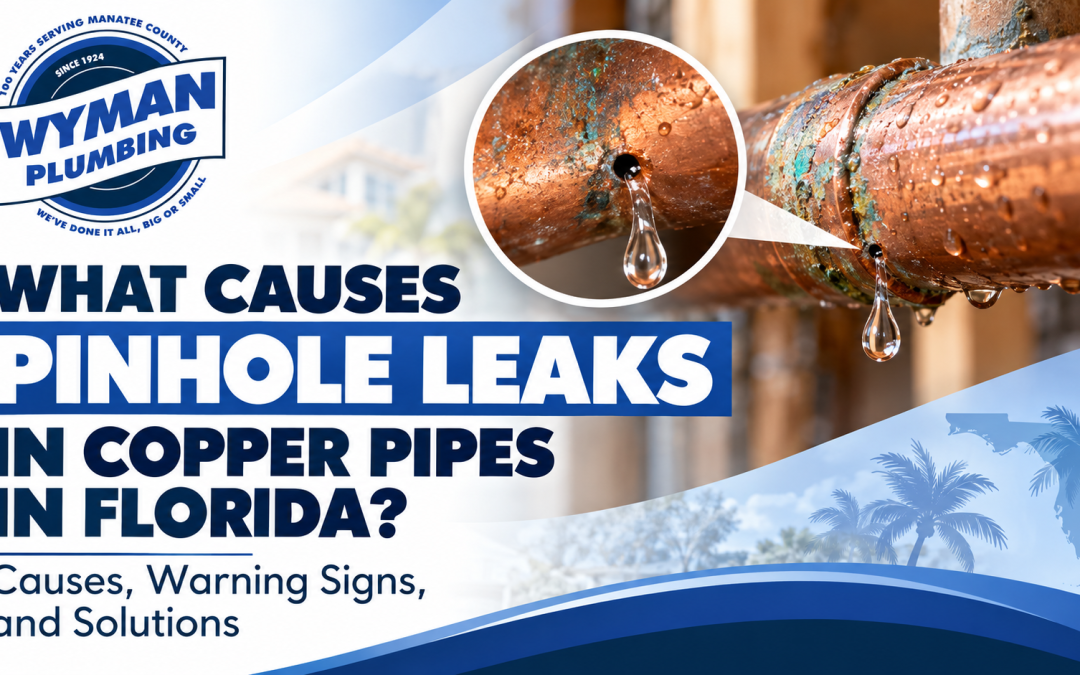
A pinhole leak is a tiny opening that develops through the wall of a copper plumbing pipe. These holes are often caused by localized corrosion, which gradually weakens a small area of the pipe until water can escape.
Unlike a burst pipe, a pinhole leak may release only a small amount of water. However, even a slow leak can damage drywall, flooring, cabinets, insulation, and structural materials over time.
Pinhole leaks commonly develop in:
Copper water supply lines inside walls
Pipes running through ceilings or attics
Hot and cold water distribution lines
Copper pipes beneath concrete slabs
Plumbing connections and fittings
Because many copper water lines are concealed, homeowners may not notice a problem until visible water damage appears.
7 Common Causes of Pinhole Leaks in Copper Pipes in Florida
1. Internal Corrosion from Water Chemistry
One of the leading causes of copper pipe pinhole leaks is internal corrosion.
Copper naturally develops a protective surface layer under many water conditions. However, certain water chemistry characteristics can interfere with that protection and contribute to localized corrosion.
Factors that may influence copper corrosion include:
Low or unusually high pH levels
Dissolved oxygen
Chloride and sulfate concentrations
Alkalinity and dissolved inorganic carbon
Disinfectant chemistry
Water temperature and flow conditions
Water chemistry varies among Florida communities and water suppliers. A water supply that contributes to corrosion in one plumbing system may not produce the same results in another.
Important: Hard water alone does not necessarily cause pinhole leaks. Corrosion depends on several interacting factors, and the exact cause should be determined through an appropriate plumbing evaluation.
2. High Water Pressure and Excessive Water Velocity
High water pressure can place additional stress on plumbing components, while excessive water velocity and turbulence can contribute to a type of deterioration known as erosion-corrosion.
This occurs when flowing water disrupts protective surface films inside the copper pipe, allowing localized deterioration to develop.
Areas particularly susceptible to this problem may include:
Pipe elbows and sharp bends
Improperly installed fittings
Locations with restricted flow
Pipes with excessive water velocity
Sections downstream of turbulent connections
A licensed plumber can evaluate water pressure and determine whether the plumbing system has flow conditions that could contribute to premature pipe deterioration.
3. Aging Copper Plumbing Pipes
Copper pipes can last for decades, but their service life depends on water quality, installation practices, operating conditions, and maintenance.
As copper pipes age, corrosion may gradually reduce the thickness of the pipe walls.
Older Florida homes may have copper plumbing that has experienced decades of exposure to changing water chemistry, repairs, and everyday use.
Aging pipes may develop multiple weak points, increasing the likelihood of recurring leaks.
If your home has experienced several copper pipe leaks within a relatively short period, it may be time to consider a more comprehensive plumbing inspection.
4. Improper Copper Pipe Installation
Installation practices can influence the long-term performance of copper plumbing.
Poor workmanship may create conditions that accelerate corrosion or damage pipe walls.
Potential installation-related problems include:
Excessive soldering flux left inside pipes
Improperly prepared pipe connections
Inadequate pipe support
Sharp bends or damaged pipe sections
Connections between incompatible metals without appropriate precautions
Debris remaining inside the plumbing system
For example, excessive soldering flux can contribute to localized corrosion near joints under certain conditions.
Proper installation techniques help reduce the risk of premature plumbing failures.
5. Corrosion Beneath Deposits Inside Pipes
Over time, mineral deposits, sediment, and corrosion products can accumulate inside copper plumbing.
Under certain conditions, deposits create localized environments where corrosion develops differently from the surrounding pipe surface.
This process, sometimes called under-deposit corrosion, can eventually produce small pits that penetrate the pipe wall.
Not every mineral deposit causes corrosion, and not every copper pipe with buildup will develop a leak. However, deposits can be a contributing factor when combined with unfavorable water chemistry and flow conditions.
6. Hot Water and Temperature-Related Corrosion
Hot water plumbing systems can experience different corrosion conditions than cold water lines.
Higher temperatures can accelerate certain chemical reactions and influence the formation and stability of protective films inside copper pipes.
Additional factors include:
Excessively high water heater temperatures
Continuous hot water recirculation
High flow velocities
Water chemistry that becomes more aggressive at elevated temperatures
Homes with hot water recirculation systems may be particularly vulnerable to erosion-corrosion when water velocity is excessive.
Routine water heater maintenance and proper system configuration can help support plumbing performance.
7. External Corrosion from Moisture and Building Materials
Not all copper pipe pinhole leaks originate inside the pipe.
External corrosion can develop when copper plumbing is exposed to certain chemicals, persistent moisture, or corrosive building environments.
Potential contributing conditions include:
Prolonged contact with damp or contaminated materials
Certain chemicals in soil or construction materials
Corrosive residues on the pipe exterior
Inappropriate contact with incompatible materials
Moisture trapped around concealed plumbing
For copper pipes installed beneath concrete slabs or within building materials, determining whether corrosion originated internally or externally is important when selecting a long-term repair strategy.
Why Are Pinhole Leaks a Concern for Florida Homeowners?
Florida’s climate and residential construction characteristics can make concealed plumbing leaks especially troublesome.
Florida Humidity Can Complicate Moisture Problems
Florida’s warm, humid environment can make it more difficult for damp building materials to dry after a leak.
When moisture remains trapped behind walls, beneath flooring, or inside cabinets, mold growth and deterioration of building materials become greater concerns.
Slab Foundations Can Conceal Water Leaks
Many Florida homes are built on concrete slab foundations.
When water supply lines run beneath or through a slab, a pinhole leak may remain hidden until homeowners notice changes in flooring, unexplained water consumption, or persistent dampness.
Water Quality Varies by Location
Municipal water treatment methods and source water characteristics vary throughout Florida.
These differences can influence copper pipe corrosion, although no single water characteristic explains every pinhole leak.
Homeowners experiencing repeated leaks may benefit from both a professional plumbing evaluation and a review of their water supplier’s available water quality information.
Warning Signs of Pinhole Leaks in Copper Plumbing
Common symptoms of a hidden copper pipe leak include:
Unexplained increases in water bills: Water consumption rises without a corresponding change in household usage.
Water stains on walls or ceilings: Yellow or brown discoloration appears around concealed plumbing.
Damp cabinets or flooring: Moisture develops around sinks, walls, or other plumbing locations.
Reduced water pressure: A substantial leak may affect pressure, although small pinhole leaks often do not.
Musty odors: Persistent moisture creates conditions that can support microbial growth.
Sounds of running water: Water can sometimes be heard moving when fixtures are turned off.
Repeated plumbing leaks: Multiple leaks in different locations may indicate a broader piping problem.
For more information about identifying unexplained water consumption, read High Water Bill: 8 Plumbing Problems That Could Be Responsible.
How to Check for a Hidden Copper Pipe Leak
If you suspect a pinhole leak, there are several steps you can take before scheduling professional leak detection.
Step 1: Turn Off All Water Fixtures
Make sure faucets, showers, washing machines, dishwashers, irrigation systems, and other water-using fixtures are not operating.
Step 2: Check Your Water Meter
Look for a leak indicator or observe the meter reading.
If the meter continues registering water use when everything is turned off, there may be a leak somewhere in the plumbing system.
Be aware that running toilets, irrigation leaks, and other fixtures can produce similar results.
Step 3: Inspect Visible Copper Plumbing
Examine accessible copper pipes beneath sinks, near water heaters, and in other exposed locations.
Look for greenish-blue corrosion deposits, dampness, staining, or small water droplets.
Discoloration alone does not confirm a pinhole leak, but it can indicate an area worth inspecting.
Step 4: Contact a Professional Plumber
If you suspect a concealed leak, professional leak detection can help locate the problem without unnecessary demolition.
Depending on the plumbing configuration, a plumber may use acoustic equipment, pressure testing, moisture detection, or other diagnostic methods.
Can Pinhole Leaks in Copper Pipes Be Repaired?
Yes. Many pinhole leaks can be repaired, but the best solution depends on the condition of the surrounding plumbing.
Localized Copper Pipe Repair
When a leak is isolated and the remaining pipe is in good condition, a plumber may remove the damaged section and install replacement piping or appropriate fittings.
This can be a practical solution for a single, accessible leak.
Partial Copper Pipe Replacement
If several leaks have developed in one area, replacing a longer section of copper piping may be more reliable than repeatedly repairing individual holes.
Whole-Home Repiping
For homes experiencing widespread corrosion or recurring pinhole leaks, whole-home repiping may be worth considering.
Depending on local code requirements and the plumbing system, replacement materials may include copper or approved PEX piping.
Repiping is a substantial project and should be recommended based on the actual condition of the system rather than the presence of a single leak.
How to Help Prevent Pinhole Leaks in Copper Pipes
Although not every copper pipe leak can be prevented, proactive maintenance can reduce certain risks.
Schedule Plumbing Inspections
Periodic inspections can identify visible corrosion, deteriorating connections, abnormal water pressure, and other warning signs.
Monitor Household Water Pressure
Excessive pressure should be evaluated and corrected when necessary. However, pressure adjustment alone will not resolve every type of copper corrosion.
Address Water Chemistry Problems When Confirmed
If testing identifies corrosive water conditions, a qualified professional can recommend appropriate treatment.
Avoid installing water treatment equipment solely on the assumption that hard water is responsible for pinhole leaks.
Maintain Water Heaters and Recirculation Systems
Proper water heater operation and appropriate recirculation flow rates can help reduce conditions that contribute to certain types of pipe deterioration.
Investigate Repeated Leaks
If your home develops multiple pinhole leaks, avoid treating each occurrence as an unrelated problem.
A comprehensive inspection may reveal a systemic issue that requires a broader solution.
For additional guidance, explore our article on The Lifespan of Plumbing Pipes in Bradenton Homes.
Frequently Asked Questions About Copper Pipe Pinhole Leaks
1. Why do copper pipes develop pinhole leaks in Florida?
Copper pipes in Florida can develop pinhole leaks because of localized corrosion, water chemistry, excessive water velocity, aging, or installation defects. Water characteristics vary among communities, so there is no single statewide cause. A professional plumber can evaluate the pipe condition, pressure, and leak history to help determine why the problem is occurring.
2. Does Florida hard water cause pinhole leaks in copper pipes?
Hard water does not automatically cause copper pipe pinhole leaks. Calcium and magnesium minerals may form deposits, but copper corrosion depends on several interacting factors, including pH, alkalinity, disinfectants, temperature, and flow conditions. Testing the water and examining the affected piping can help identify whether water chemistry is contributing to corrosion.
3. How long do copper pipes last in Florida homes?
Copper plumbing pipes often last several decades, and some systems remain serviceable for 50 years or longer. Actual lifespan varies with water chemistry, installation quality, pipe thickness, and operating conditions. Repeated pinhole leaks, visible corrosion, or recurring repairs may indicate that an older copper plumbing system needs a comprehensive evaluation.
4. Should I repair a pinhole leak or replace my copper pipes?
A single pinhole leak in otherwise sound copper piping may be repaired by replacing the damaged section. However, repeated leaks or widespread corrosion may justify partial replacement or whole-home repiping. A licensed plumber should assess the overall pipe condition, accessibility, repair history, and potential for future failures before recommending a solution.
5. Can a pinhole leak cause serious water damage?
Yes. Even a small pinhole leak can release water continuously, damaging drywall, flooring, cabinets, and insulation. Concealed leaks may remain unnoticed for weeks or longer, allowing moisture to accumulate and potentially support mold growth. Prompt leak detection and professional repairs can help limit damage and reduce restoration costs.
Professional Copper Pipe Leak Detection and Repair in Bradenton, Florida
Pinhole leaks may be small, but the damage they cause can become a major expense. Whether you’re dealing with a mysterious water stain, an unexpected increase in your water bill, or repeated copper pipe failures, identifying the source of the problem is essential.
Wyman Plumbing helps homeowners and businesses in Bradenton, Sarasota, Lakewood Ranch, and surrounding areas address plumbing leaks and related plumbing concerns.
Don’t wait for a small leak to become a major water damage problem.
Contact Wyman Plumbing today to discuss your plumbing concerns and schedule professional assistance.